
六、庄士敦:末代皇帝溥仪的“苏格兰老夫子”
Sir Reginald Fleming Johnston: The Scotsman Who
Witnessed the Twilight of the Qing Dynasty
1920年的紫禁城里,一位穿西装、说着流利北京官话的英国人,每天骑马穿过神武门,前往毓庆宫给少年溥仪授课。他教英文、数学、西方历史,也讲英国王室、工业文明、世界大战与现代国家制度,还介绍自行车、电话、留声机和西方报刊,让溥仪真正意识到,宫墙外早已是另一个世界。
In the Forbidden City of the 1920s, a British man in a Western suit, fluent in Beijing Mandarin, rode daily through the Shenwu Gate to tutor the young Emperor Puyi in the Hall of Yuqing. He taught English, mathematics, and Western history, while introducing the British monarchy, the First World War, industrial civilization, and the modern nation-state. He brought bicycles, telephones, gramophones, and Western newspapers into the palace, allowing the boy Emperor to realize for the first time that the world beyond the palace walls had already transformed beyond recognition.
这位英国人就是庄士敦。在中国近代史上,他是一位非常特殊的人物:既是英国殖民官员,也是著名汉学家;既长期服务于英国体系,又深深迷恋中国文化;既推动溥仪接触现代文明,又始终保留着对“大清复辟”的幻想。他留下的《紫禁城的黄昏》,成为西方世界理解晚清宫廷最重要的作品之一。
This man was Sir Reginald Fleming Johnston. In modern Chinese history, he occupies a special position: a British colonial official and a sinologist; a servant of the British imperial system and yet a devoted admirer of Chinese civilization; a tutor who introduced modernity to Puyi while still nurturing the idea of a "Qing restoration". His memoir Twilight in the Forbidden City remains one of the most important Western accounts of the late Qing Dynasty Court.
一、一位迷恋中国文化的苏格兰青年
A Scottish Youth Captivated by Chinese Culture
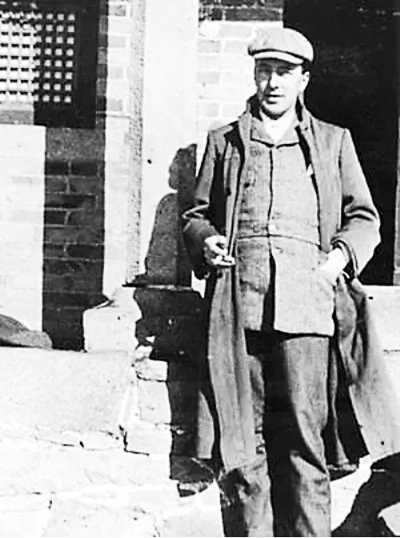
图:青年庄士敦,1904年
Image: Reginald Johnston in his youth,1904
1874年,庄士敦出生于苏格兰爱丁堡。他先后就读于爱丁堡大学和牛津大学玛格德琳学院,主修历史、文学和法理学。1898年,他通过英国殖民地部考试,被派往香港任职。从此,他开始真正接触中国社会。
Born in Edinburgh in 1874, Reginald Johnston studied at the University of Edinburgh and later at Magdalen College, Oxford, where he read history, literature, and law. In 1898, he entered the British Colonial Service and was posted to Hong Kong, marking his first deep encounter with China.
庄士敦苦学中文,不仅学习北京官话,还钻研广东话与潮州方言;他阅读《论语》《孟子》等儒家经典,游历中国名山古刹,与士绅、文人和僧侣广泛交往。他后来给自己取中文名“庄士敦”,字“志道”,出自《论语》“士志于道”,展现出他对中国士大夫精神的认同。
Reginald Johnston systematically studied Chinese languages, not only mastering Mandarin but also studying Cantonese and the Teochew dialect. He read Confucian classics such as The Analects and Mencius, traveled widely across China’s temples and sacred mountains, and engaged with scholars, monks, and local gentry. He later adopted the Chinese name “Zhuang Shidun” and the courtesy name “Zhidao,” drawn from the Confucian ideal that “a gentleman sets his heart upon the Way.”
相比同时代许多殖民官员,他对中国文化表现出罕见尊重,甚至公开批评西方传教士对中国的傲慢态度,认为许多欧洲人以殖民者的优越感误读中国文明。他对中国佛教的兴趣尤为浓厚,还因此被英国殖民体系视为“过于亲华”的官员。这种精神上的倾斜,使他后来成为近代史上最特殊的“中国通”之一。
Unlike many colonial officials of his time, Reginald Johnston showed unusual respect for Chinese culture. He openly criticized the arrogance of Western missionaries in China, arguing that Europeans too often misread Chinese civilization through a lens of arrogance and superiority. His deep interest in Chinese Buddhism further set him apart, earning him a reputation within the colonial administration as “excessively pro-Chinese.”
二、威海卫生活
Life In Weihaiwei
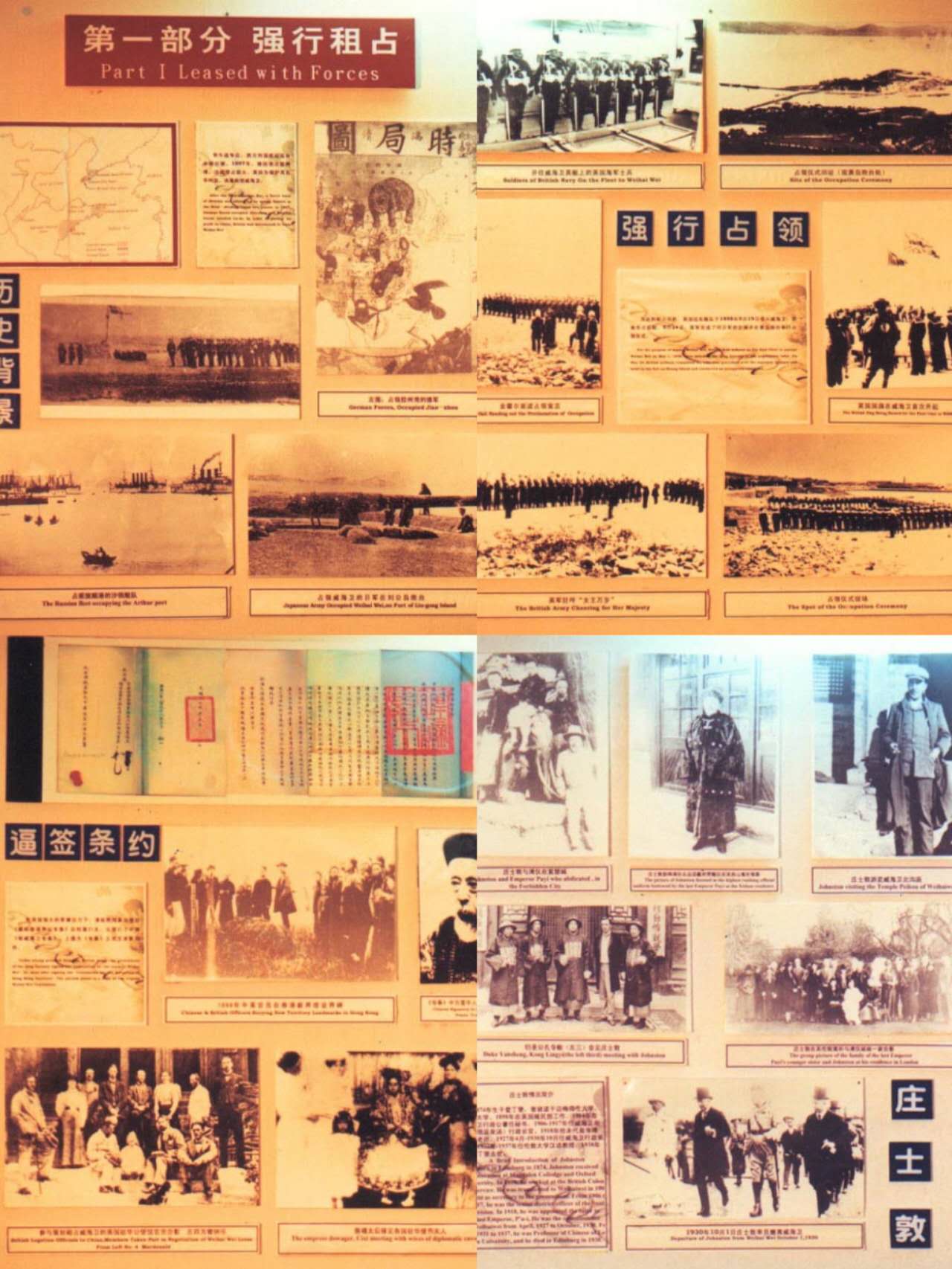
图:英租威海卫部分图片展(来源:威海市档案馆)
Image: A selection of photos from the British-leased Weihaiwei exhibition (Source: Weihai Municipal Archives)
1898年,清政府被迫同英国签订不平等条约《中英订租威海卫专条》,威海卫沦为英国“租借地”。1904年,庄士敦被调往威海卫,担任华务司官员,在威海卫任职二十余年。
In 1898, the Government of Qing Dynasty was forced to sign the Convention for the Lease of Weihaiwei with Britain. Weihaiwei became a leased territory utilized primarily as a summer sanatorium for the British Navy. In 1904, Reginald Johnston was transferred to Weihaiwei, where he served in various administrative roles for more than two decades and ultimately became the last British Commissioner.
在这一时期,庄士敦广泛游历中国。1906年,他从北京出发,经云南进入缅甸,写成《从北京到瓦城》;之后又出版《北方中国的狮与龙》《佛教徒的中国》等著作。
During this period, Reginald Johnston traveled extensively across China. In 1906, he journeyed from Beijing through Yunnan to Burma and the experience was recorded in From Peking to Mandalay. He also published Lion and Dragon in Northern China and Buddhist China.
三、紫禁城里的“洋帝师”
The Foreign Tutor in the Forbidden City
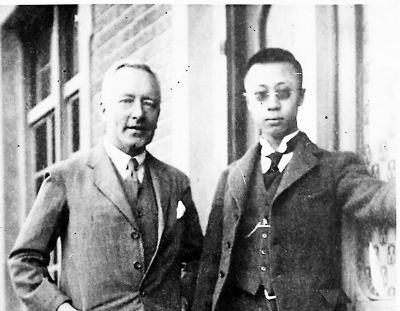
图:清朝末代皇帝溥仪和庄士敦,1924年
Image: Puyi, the last emperor of the Qing Dynasty, and Reginald Johnston, 1924
1919年,庄士敦的人生进入传奇阶段。辛亥革命后,溥仪虽然退位,但依旧居住在紫禁城,根据《清室优待条件》保留皇帝称号与宫廷体系。张勋复辟失败后,清室遗老逐渐意识到仅靠传统教育已无法适应时代,于是在李鸿章之子李经迈推荐下,庄士敦被聘为溥仪的英文教师。1919年3月,庄士敦正式进入紫禁城,这位苏格兰人开始深刻影响中国最后一位皇帝,被其称为“苏格兰老夫子”。
In 1919, Reginald Johnston entered the most remarkable phase of his life. After the Xinhai Revolution, Puyi had abdicated but continued to live inside the Forbidden City, retaining his imperial title and court under the terms of the Articles of Favourable Treatment of the Great Qing Emperor after His Abdication. Following the failure of Manchu testorationist Zhang Xun’s brief restoration, Qing loyalists gradually came to realize that traditional court education alone could no longer prepare the young emperor for a rapidly changing world. On the recommendation of Li Jingmai, the son of Li Hongzhang, a then highly influential Chinese modernizer, Reginald Johnston was invited to serve as Puyi’s English tutor. In March 1919, he formally entered the Forbidden City, beginning a relationship that would profoundly shape the life of China’s last emperor, and was referred to by Puyi as his "Scottish old master."
庄士敦不仅教授英语、数学和西方历史等知识,还向溥仪讲述英国王室、欧洲政治制度与现代工业文明,介绍一战中的飞机、坦克与潜艇,让长期生活在宫墙中的少年第一次感受到现代世界的力量。
Reginald Johnston taught English, mathematics, and Western history, but his influence went far beyond formal instruction. He spoke to Puyi about the British monarchy, European political systems, and the workings of modern industrial society. He also introduced the technologies ushered in the First World War such as airplanes, tanks, and submarines, revealing to the young emperor, for the first time, the scale and force of modern civilization.
最著名的一件事是“配眼镜”。溥仪长期近视,却因宫中迷信“戴洋眼镜不吉利”而无法矫正视力。庄士敦坚持认为,如果不让溥仪配眼镜,他就辞职。最终,溥仪第一次戴上眼镜。后来他回忆:“我第一次真正看清了世界。”
One of the most famous episodes was his insistence that Puyi wear glasses. Palace superstition forbade spectacles, but Reginald Johnston refused to continue teaching unless the emperor was treated. Puyi eventually wore glasses for the first time.

图:1924年,清朝末代皇帝溥仪和庄士敦在英国驻北京公使馆
Image: Puyi, the last emperor of the Qing Dynasty, and Reginald Johnston at the British Legation in Beijing, 1924
1924年,冯玉祥发动北京政变,溥仪被逐出紫禁城。庄士敦曾试图帮助溥仪进入英国使馆,但日本势力抢先一步,溥仪最终进入日本公使馆,并逐渐走向“伪满洲国皇帝”的道路。庄士敦关于“大清复辟”的幻想彻底破灭。
After Chinese warlord Feng Yuxiang’s coup in 1924, Puyi was expelled from the Forbidden City. Reginald Johnston attempted to secure asylum in the British Legation, but Japanese influence prevailed. Puyi was taken into the Japanese Legation and later became the illegal "emperor" of the Manchukuo puppet state, marking the collapse of Johnston’s political lunacy.
四、一个时代的余晖
The Last Glow of an Era
1927年,庄士敦再次被派往威海卫,担任行政长官,负责处理威海卫归还中国事务。1930年10月1日,威海卫正式回归中国,庄士敦以最后一任行政长官身份出席交接仪式。
In 1927, Reginald Johnston was once again appointed to Weihaiwei as its commissioner, tasked with overseeing the territory’s return to China. On 1 October 1930, Weihaiwei was formally handed back to China. As its last commissioner, Reginald Johnston attended the transfer ceremony.
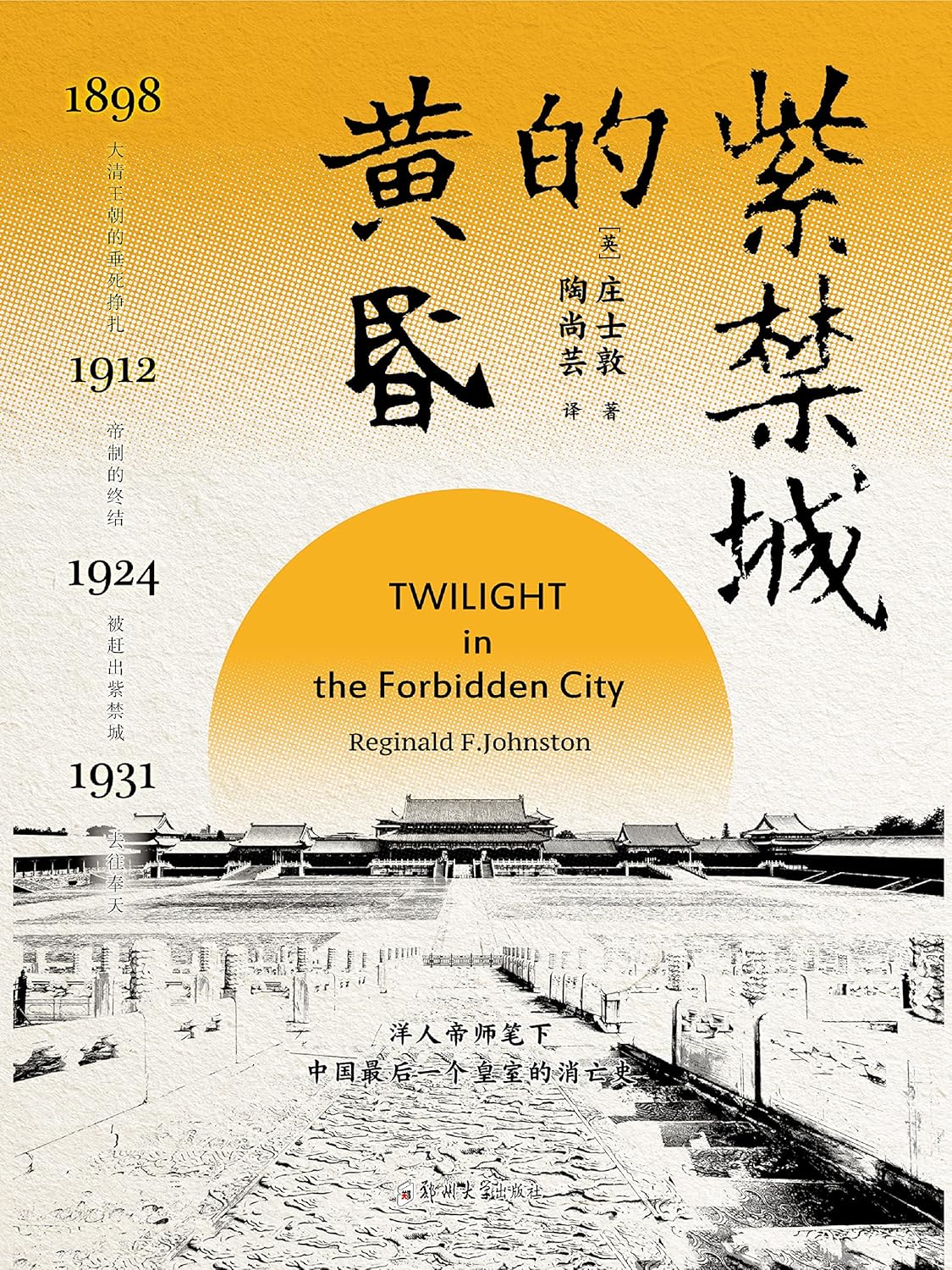
图:庄士敦著《紫禁城的黄昏》
Image: Twilight in the Forbidden City written by Reginald Johnston
回国后,庄士敦出任伦敦大学亚非学院中文教授,并担任英国外交部顾问。他将自己收藏的大量中国典籍捐赠给学校,形成英国最重要的汉学藏书之一。1934年,他出版《紫禁城的黄昏》,详细记录晚清宫廷生活与溥仪成长经历。这本书后来成为电影《末代皇帝》的重要蓝本。
After returning to Britain, Reginald Johnston became Professor of Chinese at the School of Oriental and African Studies (SOAS), University of London, and also served as advisor to the British Foreign Office. He donated his extensive collection of Chinese classics to SOAS, helping to form one of the most significant Chinese studies libraries in the U.K. In 1934, he published Twilight in the Forbidden City, a vivid account of life in the late Qing Dynasty Court and his years as tutor to Puyi. The book later became one of the key sources for Bernardo Bertolucci’s film The Last Emperor.
晚年的庄士敦,心始终没有真正离开中国。他用版税在苏格兰买下一座湖心小岛,悬挂清朝龙旗,房间命名为“皇帝厅”“威海卫厅”“松竹厅”,屋内摆满溥仪赠送的字画与瓷器。每逢节日,他甚至穿着清朝官服招待朋友。1938年,庄士敦病逝于爱丁堡,终年64岁。
In his later years, Reginald Johnston never fully left China behind in his mind. He used the royalties from his writings to purchase a small island in a Scottish loch, where he flew the dragon flag and named rooms such as “Emperor’s Hall,” “Weihaiwei Hall,” and “Pine and Bamboo Hall.” The house was filled with calligraphy, paintings, and porcelain gifts from Puyi. On special occasions, he even dressed in Qing official robes to receive guests. He passed away in Edinburgh in 1938, aged 64.
庄士敦的一生,正是晚清与民国时代中英文明碰撞的缩影。他真正迷恋的,其实是一个理想化、诗意化、充满儒家秩序感的静止的中国;真实的中国,正在列强压迫、山河破碎中致力于救亡图存、驱除鞑虏、振兴中华。今天的中国,紫禁城早已不属于皇帝,真正属于了中国人民;而庄士敦想要挽留的旧时代虽永远消失,但他尊重、欣赏的中国历史、中国文化与中国精神正生生不息、发展繁荣。这一点,也许会让这位苏格兰人感到欣慰。
Sir Reginald Fleming Johnston's life echoed the complex encounter between Chinese and British civilizations during the late Qing and Republican eras. What he longed for was an idealized, poetic, and pristine China shaped by Confucian tradition. The China that actually emerged, however, was struggling to survive amidst foreign oppression and shattered condition, striving to expel the invaders and revitalize the nation. Today, the Forbidden City no longer belongs to emperors but to the Chinese people. The world Sir Reginald Fleming Johnston once tried to preserve has vanished, yet the Chinese history, culture, and spirit he respected and admired are thriving and flourishing. This perhaps brings this Scotsman some solace.


