
五、威廉·麦考:移居苏格兰的英国首位华人绅士
William Macao: Settle in Scotland Britain's First Chinese Gentleman
今天的英国,华人早已融入当地社会。但鲜有人知,早在中国处于乾隆盛世、英国处于工业革命前夜的18世纪,就有一名来到苏格兰的中国人率先进入英国主流社会,并获得“绅士”身份,被认为是“第一位在英国长期定居并获得社会尊重的中国人”,成为中国同苏格兰交流的桥梁。他,就是威廉·麦考。
In contemporary Britain, Chinese community is a valuable part of the local society. Yet few people realise that as early as the eighteenth century, when China was flourishing under the Qianlong Emperor and Britain was on the eve of the Industrial Revolution, a Chinese man, who came to Scotland, had already entered the heart of British mainstream society and earned recognition as a “gentleman.” Regarded as the first Chinese person to settle permanently in Britain and gain widespread social respect, he became an important bridge between China and Scotland. His name was William Macao.
一、东方异客
An Eastern Traveller
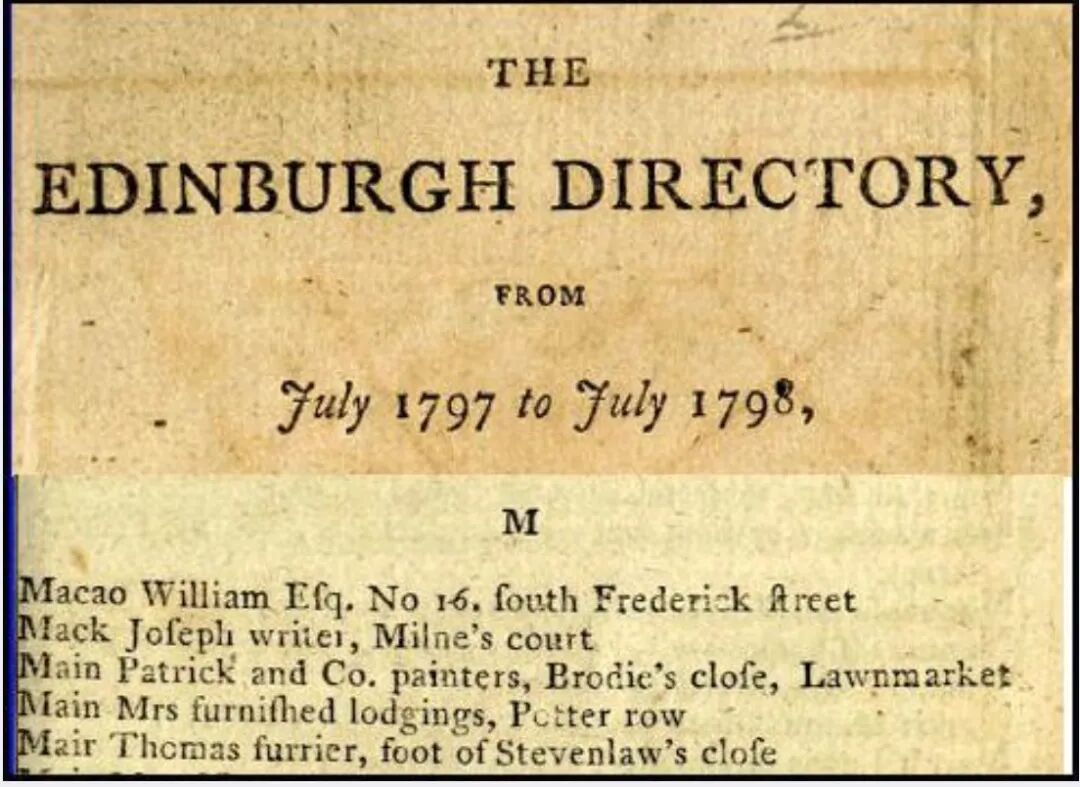
图:苏格兰官方文件对麦考的记载
Image: Scottish official records regarding William Macao
对麦考的历史记录极其有限,他可能于1770年前后从澳门出发,踏上远渡重洋的旅程。他登记自己的姓名为威廉·麦考(William Macao),以船港为姓,既保留了自己的中国身份,又便于融入苏格兰社会。他的旅程不仅是个人的冒险,更是中西贸易和交流的缩影。通过麦考,东方世界的精神和文化开始在苏格兰扎根。
Notwithstanding very few record about his origin, he is estimated to depart from Macau and embark on a long journey across the oceans around 1770. After arriving in Britain, he registered himself under the name “William Macao,” adopting the name of his port of departure as his surname. In doing so, he preserved a visible link to his Chinese origin while also helping integrate into the Scottish society. His voyage was more than a personal adventure. It reflected the broader story of growing trade and cultural exchanges between the East and the West. Through him, elements of Chinese culture and Eastern thought quietly began to take root in Scotland.
二、扎根苏格兰社会
Building a Life in Scotland
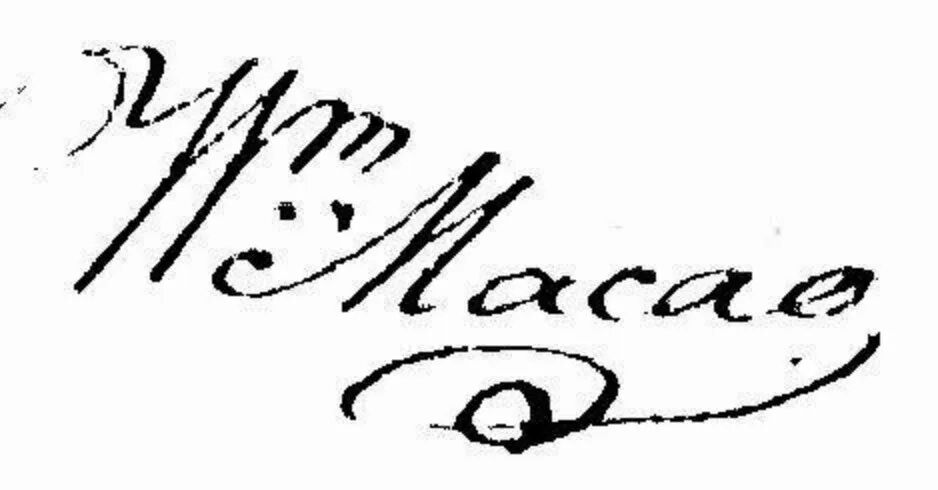
图:苏格兰银行档案馆收藏的麦考签名
Image: William Macao's signature in the Bank of Scotland archives
初到苏格兰时,麦考在当地家庭从事杂役工作,但他勤奋好学,数年后进入苏格兰消费税委员会工作。几十年间,他从助理、文员一路晋升为高级会计,最终负责公务员养老金管理,成为苏政府系统中受信任的人员。
When he first arrived in Scotland, William Macao worked in domestic service for local families. Through diligence, intelligence, and perseverance, he later secured a position with the Scottish Excise Commission. Over the decades, he rose steadily through the ranks, from assistant and clerk to senior accountant, eventually taking responsibility for managing civil servants’ pensions. He became a trusted and respected figure within the Scottish administrative system.
三、婚姻与社区参与
Marriage and Community Integration
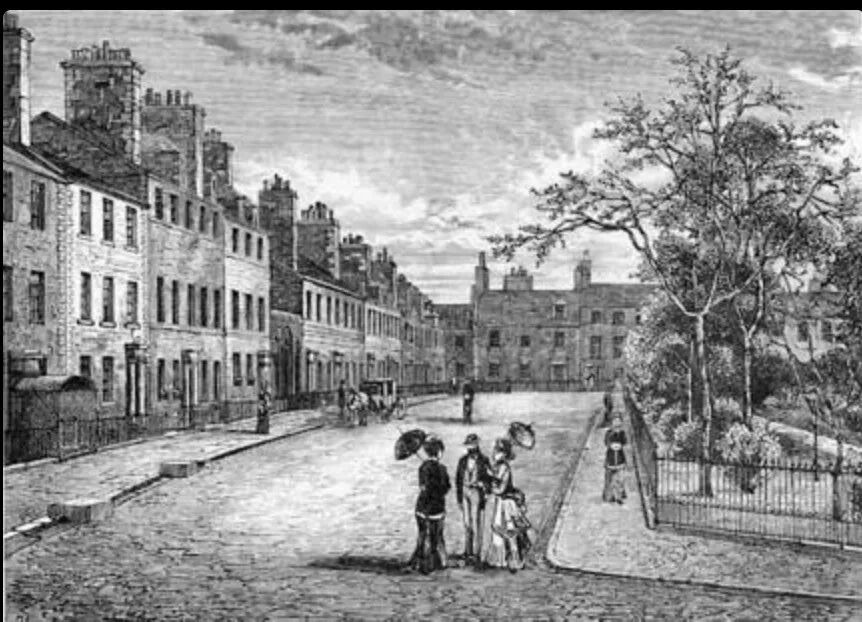
18世纪的爱丁堡示意图
Image of Edinburgh in the 18th century
1793年,麦考与苏格兰女子罗斯结婚。罗斯于1802年因难产去世,麦考终身未再婚,养大了他们的3个孩子。他加入苏格兰教会,并于1807年成为玫瑰街教堂(市民聚会所)的长老,负责维护其辖区内会众的道德风尚。
In 1793, William Macao married a Scottish woman, Helen Ross. In 1802, Ross passed away as a result of the problematic birth. Many men who were widowed and left with young children, are married again but Macao never did. He worked hard to raise their 3 children. He joined the Church of Scotland and in 1807 became a church elder at the Rose Street Church (Burgher Meeting House), responsible for policing the morals of the congregation in his alloted area.
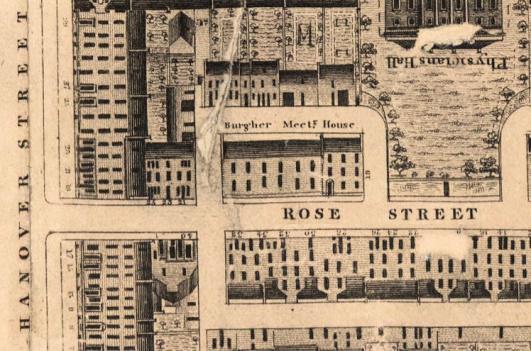
麦考居住过的街道示意图
Image of the Rose Street where William Macao Lived
通过婚姻与社区活动的参与,麦考在保留自身中华文化印记的同时,成为苏格兰社会的一份子,体现了中苏文化的互信与交融。
Through family life and active participation in the local community, William Macao gradually became fully integrated into Scottish society while still retaining elements of his Chinese heritage. His life embodied the trust, understanding, and cultural integration that developed between China and Scotland.
四、“最后的苏格兰人”
“The last Scotsman”
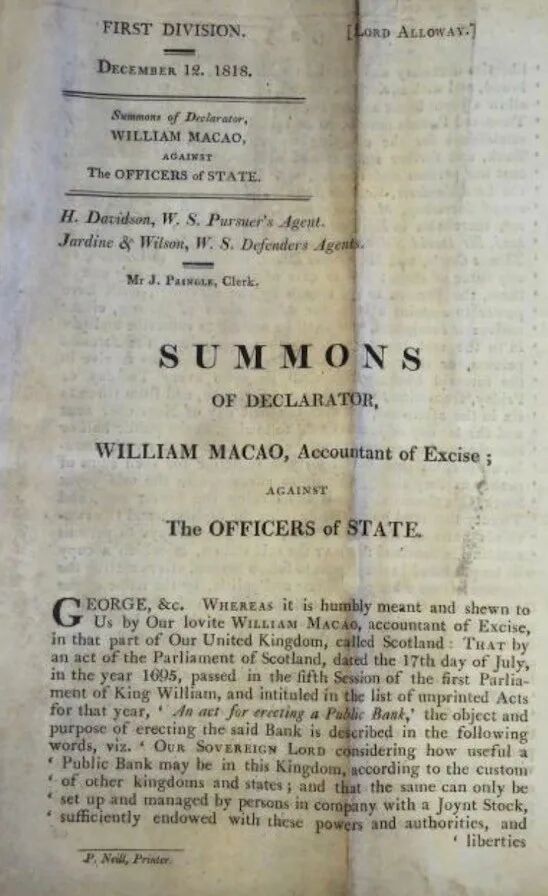
图:关于麦考的官方记载
Image: Official Records about William Macao
1818年,麦考购买苏格兰银行股票,触发了1695年苏格兰议会法案中关于设立苏格兰银行的一项古老条款:外国人可因购入至少1000苏格兰镑股票而成为“归化苏格兰人”。在英国历史上,因为1707年苏格兰已同英格兰合并,理论上“苏格兰国籍”早已消失,这条法律几乎从未被应用过。
In 1818, William Macao purchased shares in the Bank of Scotland, triggering an a clause in the Scottish Parliament Act of 1695 establishing the Bank of Scotland that stated that all foreigners (aliens) who purchased stock of at least 1,000 Scots pounds would, ‘thereby be and become naturalised Scotsmen to all intents and purposes whatever.’ Since Scotland had united with England in 1707, the concept of an independent Scottish nationality had effectively ceased to exist, and the law had long been untouched.
于是,一个法律上的“漏洞”出现了。一百多名外国人认为,购买相应股票可以让他们获得英国公民身份,从而不受政府《外国人法》的约束。麦考作为他们中的代表在苏格兰高等民事法院向苏格兰政府提起诉讼,并得到了苏格兰银行的财政支持。
As a result, a quote-unquote loophole emerged. Believing that such a purchase would bring them British citizenship and so exclude them from the government’s Alien Act, over one hundred foreigners bought the requisite amount of stock. It was William Macao who was selected to bring the action against the Scottish government, with financial support from the Bank of Scotland.
苏法院初审确认麦考身份成立,后经过苏政府上诉,苏法院又终审裁定只有议会才能授予公民身份,购买银行股票不能获得公民权。尽管麦考的苏格兰公民身份只持续了20个月,但他是自联合法案颁布以来唯一一位在法律上被认定为“苏格兰公民”的人。苏格兰人民在法律诉讼过程中给予了他大力声援与支持。
The case was heard in the Scottish Court of Session and ruled that Macao by virtue of his stock purchase had become a naturalised Scot. The government appealed and then the Scottish Court of Session overturned the judgement, ruling that it was for Parliament alone to bestow naturalisation and that a purchase of the bank stock could not bestow citizenship. Although William Macao’s Scottish citizenship lasted only 20 months, he is the only individual since the Act of Union legally to have been a Scot, as all other citizens in any part of the United Kingdom are legally British. The Scottish people gave him strong support and encouragement as for this legal case.
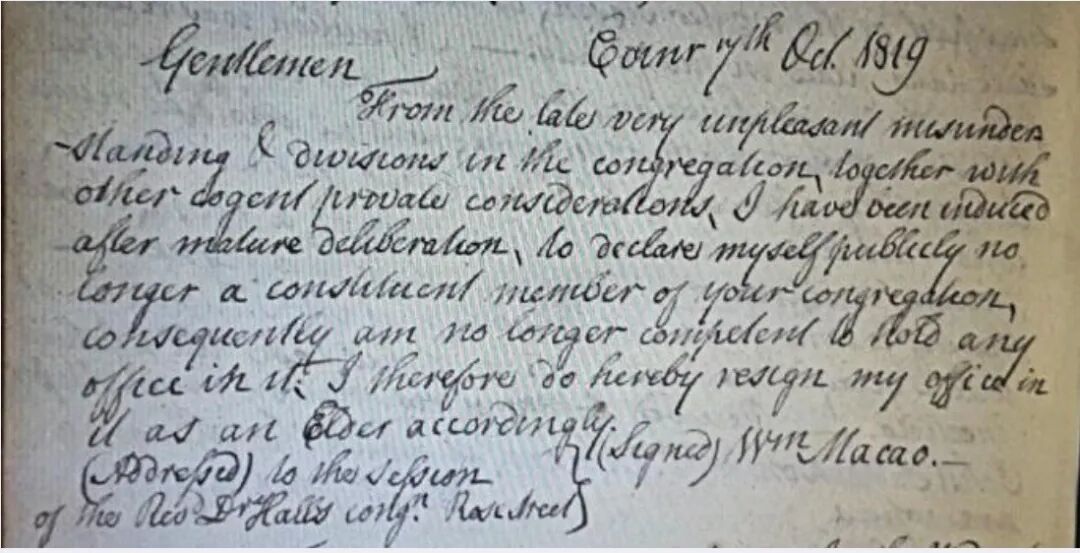
图:关于麦考身份讨论的文件记载
Image: Documentary records regarding the discussion of William Macao's identity
1831年,麦考在爱丁堡去世,葬于圣卡斯柏特墓园。他的经历告诉我们,早在两百多年前,中苏就跨越海洋、语言和制度的界限,产生了以合作和认同为注解的友好交往与文化融合。
William Macao passed away in Edinburgh in 1831 and was buried in St Cuthbert’s Churchyard. His life reminds us that more than two centuries ago, China and Scotland had already transcended the boundaries of oceans, language, and political systems to establish meaningful exchanges grounded in cooperation, mutual respect, and cultural integration.
今日,从科技、教育、医疗到金融、艺术与餐饮行业,越来越多华人华侨在苏格兰扎根,为当地经济社会发展增添活力,也为中苏友好合作注入源源不断动力。
Today, Chinese communities across Scotland are reinforcing this legacy. From science& technology, education, and NHS to finance, the arts, and the catering industry, increasing numbers of Chinese people have made Scotland their home. They contribute to local economic and social development while also serving as enduring bridges for friendship and cooperation between China and Scotland.


