
三、黄宽:中国第一位留英博士
Huang Kuan: China’s First PhD Graduate in the U.K.
1847年,广州黄埔港。18岁的黄宽带着求学的勇气踏上“女猎人号”,在海风拂面中奔向苏格兰。他带回国的火种,是现代西方医学;他创办的博济医院附设南华医学堂,是中山大学医学院的前身。他不仅成为中国首位留洋医学博士,更培养了中国首批西医人才,在中国大地播撒现代医学的点点星火。
In 1847, 18-year-old Huang Kuan, brimming with courage and determination, boarded the Hunteress at Huangpu Port in China and set sail for Scotland. What he brought home to his motherland was the seed of modern Western medicine.The Nanhua Medical School affiliated with Boji Hospital he later founded, became the predecessor of Sun Yat-sen University’s School of Medicine. Not only did Huang Kuan become China’s first medical doctor to study abroad, but he also nurtured the country’s first generation of Western medicine professionals, sowing the seeds of modern medicine across China.
一、寒门学子 孤帆逐梦
The First Chinese Doctor to Graduate from a European University
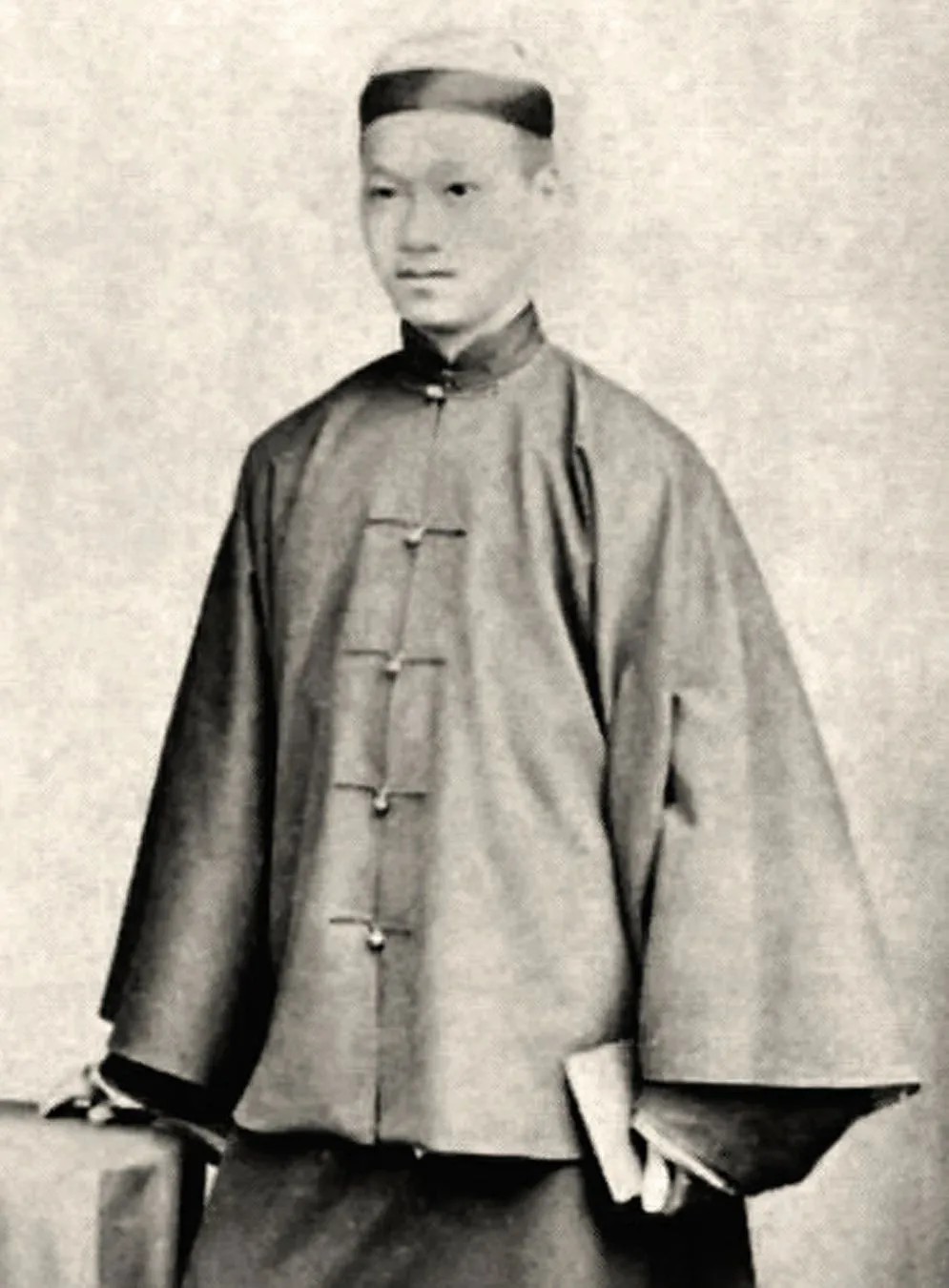
1828年,黄宽出生于广东香山县东岸乡(今广东省珠海市唐家湾镇东岸村)。因父母早亡,黄宽由祖母抚养长大。他天资聪颖,先在乡村私塾读书,后因家境贫寒而中途辍学。
Huang Kuan was born in 1828 in Dong'an Village, Tangjiawan Town, Zhuhai City. Orphaned at a young age, he was raised by his grandmother. A bright and curious child, he initially attended a humble village school but had to drop out due to poverty.
1841年,黄宽听说西方人在中国开办的第一所西式学堂——澳门马礼逊学堂不仅为贫苦学生免收学费,还提供食宿、衣服和书籍,央求乡亲为其报名,遂入校就读,改变了自身的命运。
In 1841, Huang Kuan learned about the Morrison School in Macau—the first Western-style school in China founded by Westerners. The school not only waived tuition for students from poor families but also provided room and board, clothing, and books. Seizing this rare opportunity, the young boy convinced his fellow villagers to help him enroll, embarking on a journey that would forever change the course of his life.
1847年,校长塞缪尔·布朗因其夫人患病要回美国,问谁愿意跟他赴美留学。容闳第一个站起,次黄胜,再次黄宽。三人后被称为中国最早留学生“三剑客”。在美国马塞诸塞州孟松学校毕业后,黄宽转赴爱丁堡大学学医,成为中国留英医学生第一人,也是中国近代留学欧洲并取得学位的第一人。
In 1847, when Principal Samuel Brown, whose wife needed to return to the United States for health reasons, asked who would like to accompany him to study abroad, Yung Wing was the first to volunteer, followed by Huang Sheng and then Huang Kuan. These three young men later became known as the "Three Musketeers," the first Chinese students to study overseas. After graduating from Monson School in Massachusetts, Huang Kuan went on to study medicine at the University of Edinburgh, becoming the first Chinese medical student in the U.K. and the first to study in Europe and earn a degree in history.
爱丁堡大学医学院成立于1726年,是英国历史最为悠久、最大的医学院之一。在爱丁堡大学,黄宽师从外科消毒学之父利斯特、无痛分娩开创者辛普森等世界级医学大师,苦读五年,以专业第三名的优异成绩毕业,获医学博士学位。毕业典礼上,辛普森教授说:“我相信,黄宽将成为西方医学艺术与科学的代表,在他的国人中产生重要影响。”
Founded in 1726, the University of Edinburgh Medical School is one of the oldest and largest medical schools in the U.K. There, Huang Kuan studied under world-renowned medical pioneers such as Joseph Lister, the father of antiseptic surgery, and James Young Simpson, the pioneer of painless childbirth. Huang Kuan dedicated himself to his studies for five years, graduating third in his class with a Doctor of Medicine (MD) degree. At the graduation ceremony, Professor Simpson said, " The first Chinese, I believe, who has ever graduated at a European University, will form, among his countrymen, a most able representative of the medical arts and sciences of the Western World."
今天,爱丁堡大学孔子学院门口依然矗立着黄宽的塑像。黄宽的毕业论文仍被校史珍藏。
Today, a statue of Huang Kuan stands at the entrance of the Confucius Institute at the University of Edinburgh, and his graduation thesis remains a treasured part of the university’s historical archives.

图:爱丁堡大学孔子学院门前的黄宽塑像
Image: Huang Kuan statue in front of the Confucius Institute at the University of Edinburgh.
二、破冰先锋 仁术开疆
Trailblazing Medicine with a Heart of Compassion
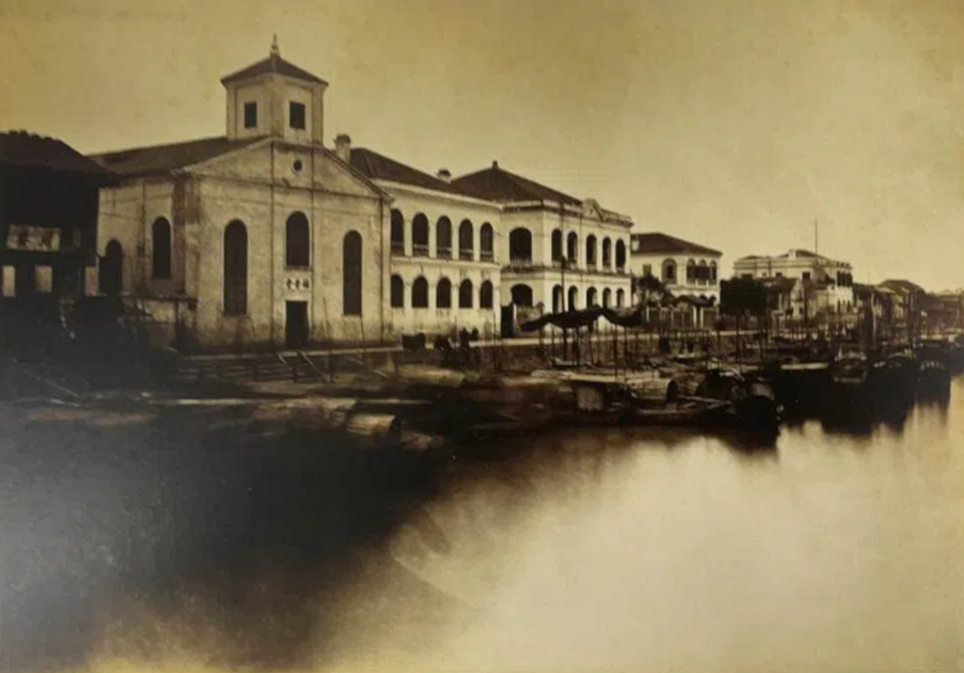
图:广州惠爱医院旧影
Vintage image of Hui’ai Hospital.
1857年,黄宽谢绝英国优越的工作生活条件,毅然回到祖国。1858年,他在广州就职于惠爱医馆,大力整顿,短短一年后病床达80张,住院病人达430人,门诊量飙升至26030人。1860年,他开设了中国第一家由中国人自主创办的西医诊所,百姓信赖他,外国侨民也称赞他的医术超过欧美医生。
In 1857, Huang Kuan turned down the superior working and living conditions offered in the U.K. and resolutely returned to his homeland. In 1858, he joined the Hui'ai Medical Clinic in Guangzhou and breathed new life into the facility. Within a year, the clinic had expanded to 80 beds, treated 430 inpatients, and handled an astounding 26,030 outpatient visits. In 1860, Huang Kuan opened the first Western-style medical clinic in China independently established by a Chinese physician. Trusted by locals and highly praised by foreign residents, his medical skills were considered superior to many European and American doctors.
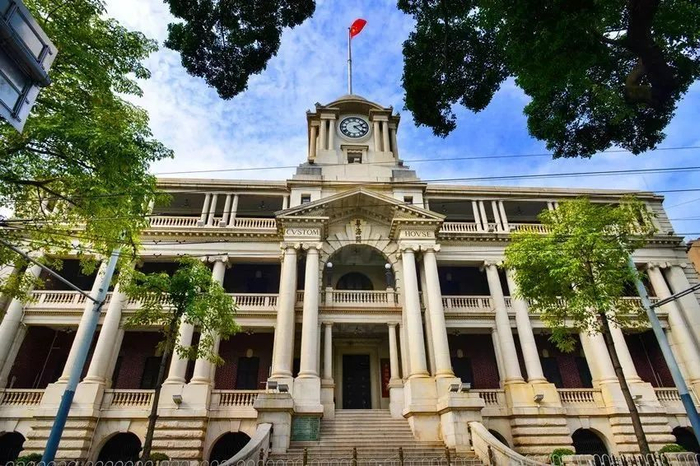
图:广州粤海关旧址
Image: Former site of the Guangzhou Customs House.
1863年,清廷海关医务处成立。17名医官,16名是外国人,唯一一位中国医官就是黄宽。他在广州海关服务16年,撰写的《关于麻风病的备忘录》等成为珍贵的医学史料。
In 1863, when the Qing Dynasty established the Customs Medical Office, Huang Kuan was the only Chinese officer among 17 medical officers, the rest being foreigners. He served Guangzhou Customs for 16 years. His memorandum on leprosy became an invaluable historical record, providing precious insights into the practice of Western medicine in 19th-century China.
三、中英携手 杏坛传薪
Passing on the Torch of Medical Knowledge
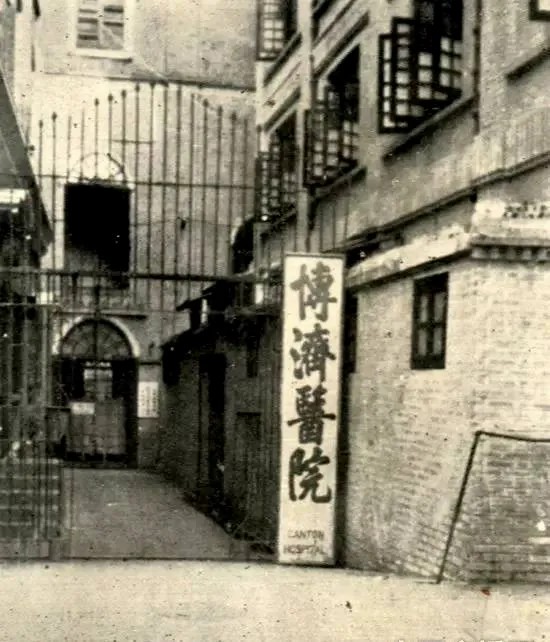
图:博济医院旧影
Vintage image of Boji Hospital.
黄宽不仅治病,更想为祖国培养一批医生。1866年,中国第一所西医学府——南华医学堂在广州博济医院附设(今中山大学医学院前身)。黄宽与英国传教士医生嘉约翰共同执教,教授解剖学、生理学和外科学。一位中国博士与一位英国医生并肩而立,共同为中国培养第一代西医人才。
Huang Kuan was not only a devoted physician but also passionately committed to training the next generation of doctors for his homeland. In 1866, China’s first Western-style medical school, the Nanhua Medical School, was founded as part of Guangzhou’s Boji Hospital. This institution would later become Sun Yat-sen University School of Medicine. Huang Kuan and the British missionary doctor John Gabriel taught side by side, sharing their knowledge of anatomy, physiology, and surgery. Together, they guided China’s very first generation of Western medicine professionals, laying the foundation for modern medicine in the country.
1867年,嘉约翰因病回国,黄宽代理博济医院院长,成为近代中国第一个医学类院校的华人校长。任内,医院管理井井有条,招生人数也大幅增加。1879年,南华医学堂首次招收3名女学生入学,在当时的中国堪称石破天惊,开启了中国女性西医教育的先河。
In 1867, when John Gabriel returned to the U.K. due to illness, Huang Kuan became acting president of Boji Hospital, making him the first Chinese president of a modern medical school in China. Under his leadership, the hospital thrived, and student enrollment grew steadily. In 1879, the Nanhua Medical School admitted its first three female students. This was a groundbreaking achievement at the time and marked the start of Western-style medical education for women in China.
四、生命践誓 医者仁心
A Physician’s Oath Fulfilled with His Life
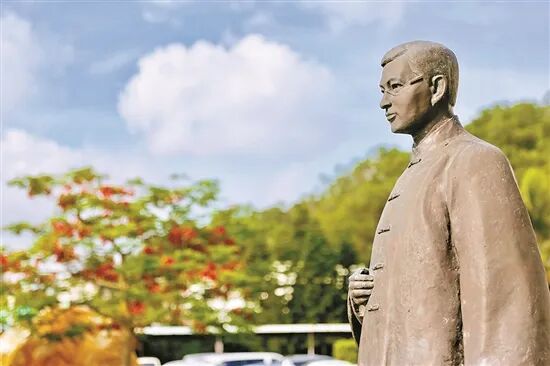
图:中山大学附属第五医院的黄宽雕像
Image: The statue of Huang Kuan at the Fifth Affiliated Hospital of Sun Yat-sen University.
黄宽晚年患有足疾,有时连走路都困难,但他从未放下手术刀。最后几年,广州瘟疫肆虐,他身体病弱却坚持出诊。每天慕名而来的病患排起半条街,有时天没亮就有人排队。
In his later years, Huang Kuan suffered from a debilitating foot ailment that often made walking difficult, yet he never put down his scalpel. When a plague swept through Guangzhou, his frail health did not stop him from seeing patients. Every day, lines of patients stretched for half a street, sometimes gathering even before dawn.
1878年,黄宽颈部患疽。他在家休养时,英国领事夫人难产,家人急请出诊。黄宽的家人再三劝阻,他仍拖着病体赶到产妇家中,硬撑着完成抢救。母子平安,他自己却病情加剧,不久后与世长辞,终年50岁。一位中国医生,最终倒在了工作岗位上,黄宽以生命践行了医者的大爱誓言。
In 1878, Huang Kuan developed an abscess on his neck. While recuperating at home, he received an urgent request to assist the wife of the British consul, who was experiencing a difficult childbirth. Despite his family’s repeated pleas to stay home, he rushed to her side and successfully ensured the safety of both mother and child. The exertion worsened his own condition, and he passed away shortly thereafter at the age of 50. A Chinese doctor, giving his life to cure patients, Huang Kuan embodied the true spirit of the physician’s oath: a life dedicated to love, duty, and the care of humanity.
百余年风云流转,医学早已日新月异,黄宽当年播下的种子,在中国枝繁叶茂、生生不息。从最初的西医启蒙,到今日体系完善的现代医疗,中国医学的发展历程,汇聚着包括留苏归国学子在内一代代医者的接续奋斗。黄宽所代表的,不只是个人的荣光,更是一段历久弥新的中苏友好交流史。
More than a century has passed, and medicine in China has advanced by leaps and bounds. Yet the seeds Huang Kuan planted have taken root, flourished, and spread across the nation. From the early introduction of Western medicine to today’s comprehensive modern medical system, his legacy is reflected in the tireless efforts of generations of Chinese medical professionals, including many who studied in Scotland and returned home in service of their motherland. Huang Kuan represents not only personal glory, but also a lasting history of friendship between China and Scotland.
让我们重温黄宽早年写给英国友人的信件(该信于1857年出版):“我来到英国学习医术,并非为了个人利益,而是为了救治我的同胞。西方在医术方面有很多值得我们学习的地方,中国也有很多智慧可以分享。只有通过交流,我们才能为所有人创造一个更美好的世界。”
In a letter to a British friend (later published in 1857), he wrote: “I came to Britain to learn medicine not for personal gain, but to bring relief to my countrymen. The West has much to teach us in healing, and China has wisdom to share too. Only through exchange can we build a better world for all.”


